


 Back to Projects
The Problem:
Organizations across Africa are stuck at early stages of AI use in the Adoption phase, with most of the usage happening at the departmental level and not at a strategic organizational level. C-suite executives understand AI’s potential but remain hesitant to move from exploration to implementation. The gap isn’t technology; it’s guidance. Leaders need clear frameworks to navigate the strategic, ethical, and operational complexities of AI adoption without making costly mistakes.
This is where the real challenge lies: How do you responsibly adopt AI when decision power is shifting from humans to algorithms? When new regulatory, reputational, and operational risks are emerging daily? When competitive advantage is being redefined by data and speed?
Executive leaders don’t need more AI hype. They need practical roadmaps, ethical safeguards, and peer insights to guide their 2026 strategic planning. That’s the gap this webinar addresses.
Project Description:
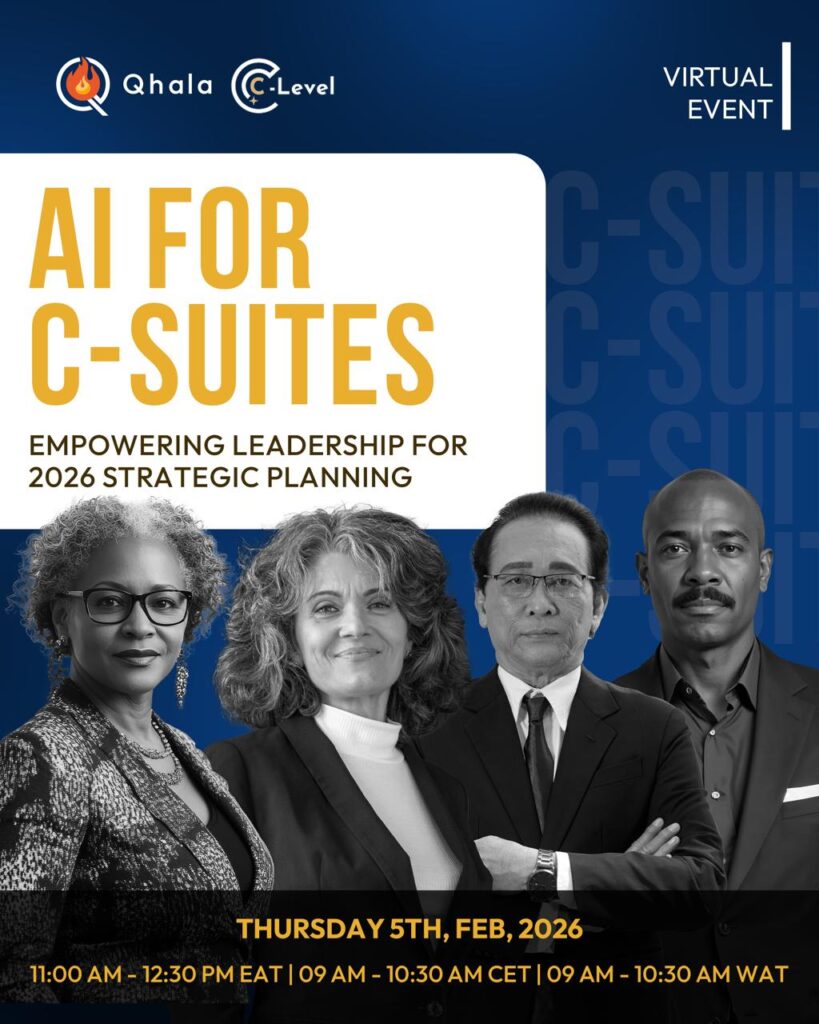
As Qhala’s Principal PMM, I curated “AI for C-Suites: Empowering Leadership for 2026 Strategic Planning,” a virtual event bringing together C-suite executives and top managers across Africa to tackle AI adoption challenges.
The focus was clear: help leaders understand the 6-phase people-centered AI adoption journey, assess their organization’s AI readiness, define AI use cases aligned with strategy, and learn how to design, test, and scale AI solutions ethically.
The session’s objectives centered on leaving no one behind, ensuring AI literacy reaches every level of leadership, and providing practical frameworks for responsible adoption.
My Approach:
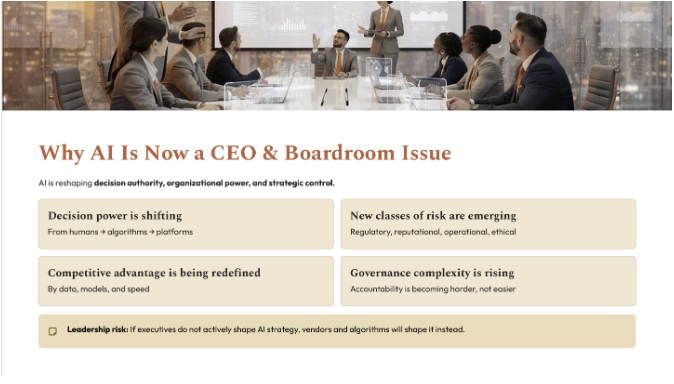
Why AI Is Now a CEO and Boardroom Issue
In product marketing, knowing your buyer personas makes all the difference. C-suite leaders need strategic frameworks, not technical details. My go-to-market strategy centered on one insight: AI is now a CEO and boardroom issue.
Decision power is shifting from humans to algorithms to platforms. New classes of risk are emerging: regulatory, reputational, operational, and ethical. Competitive advantage is being redefined by data, models, and speed. If executives don’t actively shape AI strategy, vendors and algorithms will shape it instead.
We opened the webinar with Microsoft’s AI infrastructure case.
Building Market Strategy Through Positioning
Through competitive intelligence, I saw that most AI events focus on technology features. Our narrative design took a different approach: “People-Centered AI Adoption.”
The positioning strategy addressed five core leadership dilemmas that can’t be delegated:
- Speed vs Safety
- Central Control vs Business Autonomy
- Vendor Dependency vs Strategic Capability
- Innovation vs Compliance
- Efficiency vs Workforce Transformation
This differentiated us and signaled we understand C-suite reality, not just technology.
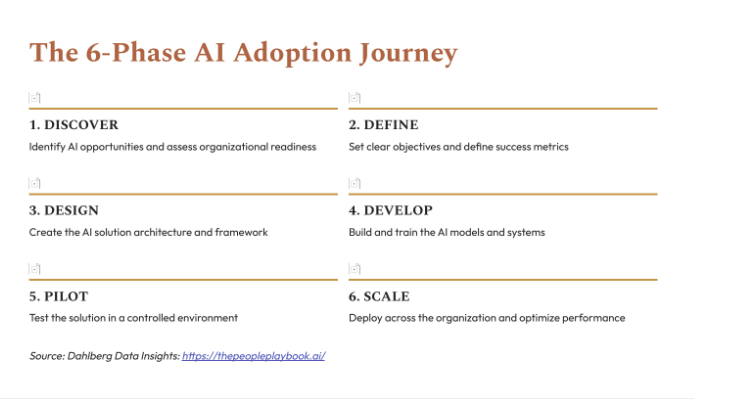
Curating the 6-Phase AI Adoption Framework
Worked closely with the research team and brought in a comprehensive framework adapted from Dahlberg Data Insights—turning it into a practical plan for AI implementation:
Phase 1: DISCOVER – Identify AI opportunities and assess readiness (User Persona Canvas)
Phase 2: DEFINE – Set objectives and success metrics (Use Case Definition Canvas)
Phase 3: DESIGN – Create solution architecture (Build vs Buy Checklist)
Phase 4: DEVELOP – Build and train models (Skills Matrix)
Phase 5: PILOT – Test in controlled environment
Phase 6: SCALE – Deploy and optimize performance
Each tool was practical and downloadable—demonstrating my understanding that C-suite leaders need actionable frameworks.
Key Insights from Breakout Sessions
I facilitated discussions where leaders tackled real challenges:
What challenges could AI address? Leaders identified decision augmentation, task automation, and predictive opportunities.
Which ethical considerations are most pressing? Data privacy, algorithmic bias, transparency, workforce displacement, and environmental impact—strategic risks affecting brand reputation and customer trust.
What resource constraints exist? Talent gaps, data quality issues, infrastructure requirements, and measuring ROI. The insight: AI adoption isn’t limited by technology—it’s limited by organizational readiness.
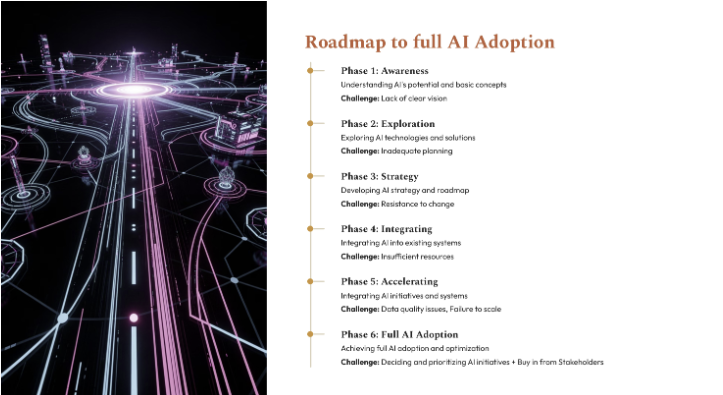
The Roadmap to Full AI Adoption
We closed with a practical model mapping six phases from Awareness (lack of clear vision) through Exploration (inadequate planning) and Strategy (resistance to change) to Integrating (insufficient resources), Accelerating (data quality issues, failure to scale), and Full AI Adoption (deciding and prioritizing AI initiatives, stakeholder buy-in).
Each phase requires different product marketing metrics and leadership interventions.
Outcomes:
This event strengthened my positioning as a tech marketing professional who understands executive needs:
Strategic Positioning: Addressed governance, risk, and competitive strategy, proving I understand C-suite decision-making beyond technology features.
Event Curation Skills: Designed compelling go-to-market planning that delivered practical value through five downloadable frameworks participants could implement immediately.
Digital Transformation Understanding: Showcased deep knowledge of AI adoption challenges, from organizational readiness to ethical safeguards to scaling strategies.
Building Qhala’s Brand: Created space for peer learning among C-suite leaders, positioning Qhala as a convening force for technology leadership in Africa.Generated Marketing Qualified Leads by positioning the event around real business challenges, attracting decision-makers ready to explore structured AI adoption.
The question for 2026 isn’t whether to adopt AI, but how to do it responsibly and strategically. That’s the conversation we’re leading.
Let’s connect! on Twitter and LinkedIn, or send me a message
